
Prehistoric Farm Open Sea: How to Get on the Water and What to Do
How to get on the open sea in Prehistoric Farm by boat from the spawn area, sail between fossil islands, and the four activities there: fishing, diving, the Sunken Grotto and the Mosasaurus.
The open sea is Prehistoric Farm's travel layer: the stretch of water that joins the spawn area to every fossil island. You get onto it by taking a boat from the spawn area and launching it — or, if your boat is small or not ready, by riding a sea dinosaur instead. Once you're afloat, the developer's own Explore list gives you four things to do out there: fish the open sea, dive for rare catches, sneak into the Sunken Grotto to steal sea reptile eggs, and team up with other players to take down the giant Mosasaurus with spears.
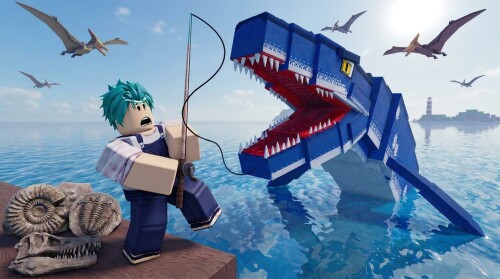
What the open sea offers
| Open-sea activity | Objective | Full guide |
|---|---|---|
| Getting around | Buy bigger boats and sail to new fossil islands | Boats guide |
| Fishing | Catch fish such as mackerel, puffer fish, sardine and swordfish | Fishing guide |
| Diving | Turn up rare catches underwater | Diving guide |
| Sunken Grotto | Sneak in and steal sea reptile eggs | Sunken Grotto guide |
| Mosasaurus | Team up with other players to take it down with spears | Mosasaurus guide |
Sailing is the connective tissue for everything else: the activities above all sit along the same body of water you cross to reach new islands.
Getting on the water
- Start at the spawn area. A boat is available there, and it's a short hop to the nearest land — the playthrough's creator took a boat from spawn to a nearby island and the crossing took less than a minute.
- Find your boat and launch it. Between trips you may have to locate it again and relaunch, as the creator did for his return leg ("I guess I have to like launch my boat again").
- Steer toward a named island. Destinations are named after the game's fossil periods — the playthrough heads for Triassic Island, then Jurassic Island.
- Upgrade to go further. Bigger boats open new fossil islands, so sea progression means buying up. Prices and where to buy aren't covered here — the boats guide handles the vehicle side, and the fossil islands guide covers the destinations themselves.
No boat ready? An aquatic dinosaur is a sanctioned substitute: "if your boat is small or not ready, a sea dino that replaces it puts you on the water without the usual wait." The game runs on PC, mobile and console, so exact steering controls differ by platform.
Navigating and getting back
There's no auto-route to rely on — you steer out and find your own way home. The trick the playthrough demonstrates is picking a landmark before you leave: the creator found spawn again by remembering the waterfall beside it ("spawn is back that way cuz I do remember that waterfall right there"), sailing back to the ranch and DNA lab. Crossing time will vary — the only timed example is that under-a-minute hop from spawn, so budget more attention for longer runs.
Once a dino is fully grown, you also have a second way to move around the area: "hop on and ride your partner dino around the islands," per the official How To Play list. See the dinosaur riding guide for that side of things.
One money note: coins cover everyday ranch costs, and GameRant's economy overview counts "a boat restock" among them, alongside dino meals. The source doesn't explain what a restock involves or costs, but it's one more reason to keep a coin stack before a long sailing session. If you're running low, current gift codes are listed on the Codes page.
Fishing the open sea
Fishing is the most hands-on solo activity on the water, and a fishing spot sits near the spawn area:
- Buy the fishing setup there and stock bait — bait is the stated prerequisite ("So, I need bait"). The exact starter item isn't named clearly in the playthrough, so treat that purchase as your entry gear.
- Cast with a timing element. Well-timed casts are announced as a "Perfect throw," which repeated across the session's casts.
- Wait for a bite, then reel in and accept the catch: "Okay, I have a macro [mackerel]. Nice. I'll take that. Oh, two macros. Three."
- Cast again — "Okay, let's do it again" — so it's an activity you can loop as long as you like.
Catches named during that session: puffer fish, sardine, mackerel and swordfish. The session shows fish being caught and accepted, but no sale or payout step, so what catches are worth isn't established here. The fishing guide has the full mechanic and catch reference.
Diving for rare catches
The second solo activity takes you under the surface: the official Explore list pairs it directly with fishing — "fish the open sea and dive for rare catches" — and GameRant independently confirms that "a dive can turn up rare catches." That's the objective: rarer finds than surface fishing offers. Documented diving scope and unknown controls are covered in the diving guide, with the rare catches reference explaining why individual rare catches are not yet named.
The Sunken Grotto and the Mosasaurus
The two special encounters give the open sea its risk and its spectacle:
- Sunken Grotto — a stealth encounter where you sneak in to steal sea reptile eggs. This page doesn't cover the Grotto's route or location; the Sunken Grotto guide and the sea reptile eggs page explain the advertised objective and the missing route details.
- Mosasaurus — the group encounter: "team up with other players to take down the giant Mosasaurus with spears." Where it spawns, when it returns, and how spears are obtained are not documented; the known objective is summarized in the Mosasaurus guide.
Pick your trip by goal: steady catches (fishing), rarer finds (diving), a stealth egg grab (Sunken Grotto) or a group fight (Mosasaurus) — the linked guides distinguish recorded fishing steps from the less documented advertised activities.
Related Guides
Boats: Upgrade and Reach New Fossil Islands
The starter boat is free at spawn; the next tier costs 4,000 coins and opens new fossil islands.
Fishing: How to Fish and What You Catch
Start fishing almost immediately: buy bait at the shore, cast, land the bite, and restock for the next catch.
Diving: How to Dive and What Dives Yield
Reach open water by bigger boat or aquatic dino, then dive \u2014 plus what dives are verified to yield.
Sunken Grotto: The Sea Reptile Egg Objective
What the sneak-in-and-steal objective confirms, how it differs from the DNA Lab egg route, and what stays unknown.